
Paleogeneticists analyzed the DNA of 370 ancient and early medieval individuals from several regions of Eurasia to clarify the origins of the Huns and determine whether they were biologically related to the Asian Xiongnu. The scientists confirmed that the Huns from the Carpathian Basin, including members of the military elite, were a genetically heterogeneous people with mixed and diverse ancestry. However, the researchers identified common genomic segments in some of them, indicating their biological kinship with later representatives of the Asian Xiongnu nobility. They report this in the journal Proceedings of the National Academy of Sciences.
In the second half of the 4th century AD, a new and formidable force emerged on the European historical stage: the Huns, who subsequently established a short-lived but vast empire stretching from Central Europe to the Volga region and the North Caucasus. Many scholars hypothesize that the Huns are related to the Xiongnu (Xiongnu), the steppe people who created the first nomadic empire in Inner Asia and dominated the steppe zone north of China between the 3rd century BC and the 2nd century AD.
However, the connection between the Huns and Xiongnu remains controversial, despite the fact that the names of these peoples or groups are very similar and may have a common origin, and the connection of the Huns to Central Asia is quite convincing. This debate is not least due to the fact that a considerable amount of time elapsed between the departure of the Xiongnu from the historical stage, replaced by the Xianbei in the Mongol-Manchurian steppe, and the appearance of the Huns in Eastern Europe, meaning it is impossible to speak of a direct continuity between the two. Furthermore, there are not many archaeological sites dating from this extended period in the territories between the former Xiongnu Empire and Europe that could be reliably linked to the future Huns.
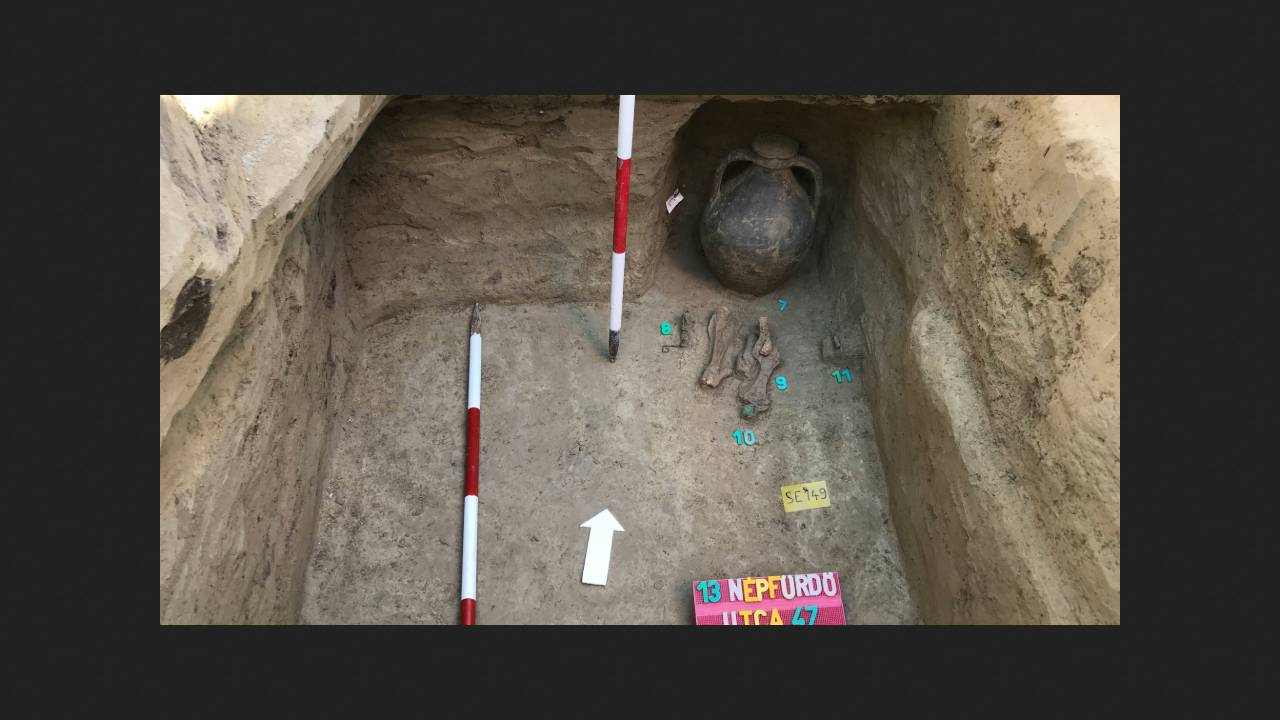
Zuzana Hofmanová of the Max Planck Institute for Evolutionary Anthropology and her colleagues from research institutions in Austria, Hungary, Germany, Kazakhstan, the United States, the Czech Republic, and South Korea turned to ancient DNA analysis to clarify the origins of the Huns and attempt to identify their possible biological connections to the Asian Xiongnu. To do this, the scientists sequenced the DNA of 35 individuals, 23 of whom were buried in the 5th–6th centuries in the Carpathian Basin. The remains of another 12 individuals came from the Berel burial ground (East Kazakhstan Region), a well-known burial site of the Pazyryk culture, where other nomads later also buried their dead. In this case, the scientists analyzed the DNA of individuals who lived in the 2nd–5th centuries CE.
Исследователи также включили в работу ранее опубликованные геномы и в общей сложности собрали выборку из 370 последовательностей ДНК древних и раннесредневековых индивидов, которых можно разделить на три группы. Первая — 80 человек из археологических контекстов, связанных с хунну (209 год до нашей эры — 98 год нашей эры). Вторая группа — 63 человека из Центральной Азии, которые умерли во II–VI веках нашей эры. Третья группа и самая многочисленная группа — индивиды из Карпатского бассейна, умершие в конце IV — конце VI века нашей эры (поздний сарматский, гуннский и гепидский периоды). Кроме того, для сравнения исследователи использовали и ранее опубликованные геномы, не относящиеся к этим трем группам.
Геномный анализ показал, что у большинства людей из Карпатского бассейна, умерших в конце IV — конце VI века нашей эры, отсутствовала примесь из популяций, связанных с Восточной (или Северо-Восточной) Азией. В разном объеме последнюю ученые обнаружили в геномах 19 человек из этого региона. Причем даже у людей, похороненных в могилах так называемого восточного типа, пропорция азиатских предков заметно отличалась, как и время их смешения с разными популяциями из более западных частей Евразии. Это говорит о том, что гунны не были однородной популяцией (что предполагалось и ранее). Более того, прибыв в Карпатский бассейн, они, видимо, продолжили смешиваться с местными группами.
Отдельное внимание ученые уделили анализу общих по происхождению сегментов геномов (IBD), который позволяет определить родство между индивидам вплоть до восьмой — десятой степеней. Эта работа позволила найти ряд пар родственников, в том числе между несколькими людьми из азиатских памятников хуннской знати, похороненных в нескольких сотнях километрах друг от друга. Однако самое важное открытие заключалось в том, что через общие по происхождению сегменты в геномах можно связать между собой нескольких человек из захоронений «восточного типа» из Карпатского бассейна и представителей хуннской элиты позднего периода через людей из захоронений III–IV века нашей эры, раскопанных в степной зоне между двумя региона. Помимо этого, исследователи отметили, что они не нашли общих сегментов в геномах людей из позднего хуннского контекста и кочевников II–VI веков нашей эры из памятников Тянь-Шаня, которых обычно в литературе также называют гуннами.
Тем самым геномные данные говорят о том, что европейские гунны не представляли собой гомогенную популяцию. В первую очередь это касается людей из захоронений так называемого восточного типа, раскопанных в Карпатском бассейне, в которых, вероятно, покоились останки представителей военной верхушки гуннов и членов их семей. При этом некоторые гунны, судя по результатам анализа ДНК, отчасти были потомками представителей хуннской элиты, погребения которых раскопали в Азии.
At the beginning of the second half of the sixth century AD, approximately a hundred years after the collapse of the Hunnic Empire, a new wave of migrants from the East—the Avars—arrived in the Carpathian Basin. Genetic analysis of the remains of the core of these newcomers revealed that they were people of predominantly Asian origin, who, even after migrating to Central Europe, mixed little with the local population.
