
American surgeons performed the world's first bladder transplant from a deceased donor. He also underwent a kidney transplant, according to the University of California, Los Angeles press service.
In cases of cancer, severe infections, and other terminal bladder dysfunctions, the bladder must be removed. To ensure urine flow from the ureters to the bladder bag, patients typically have an artificial reservoir created from a section of intestine. Because this tissue is poorly suited for such functions, up to 80 percent of patients subsequently experience complications such as recurrent infections, kidney dysfunction, and digestive problems.
To help such patients, urologists Inderbir Gill and Nima Nassiri began developing a donor bladder transplant more than four years ago at the University of Southern California. This procedure is technically challenging due to the complex blood supply to the pelvic organs. The doctors developed the technique first on pigs, then on human cadavers and brain-dead donors, continuing this work after moving to the University of California, Los Angeles. During their experiments, they decided to connect the right and left arteries and veins of the donor bladder to reduce the number of vessels to be sutured during the surgery.
The first organ recipient was 41-year-old Oscar Larrainzar, whose bladder was removed due to a rare tumor—urethral adenocarcinoma—leaving only a bladder fragment, approximately 30 milliliters in volume. Shortly thereafter, both his kidneys were also removed due to cancer and end-stage renal failure. Bladder reconstruction using a piece of intestine was impossible due to numerous post-operative scars in the abdominal cavity. The patient had been on dialysis for seven years, but its effectiveness began to rapidly decline, and severe edema developed.
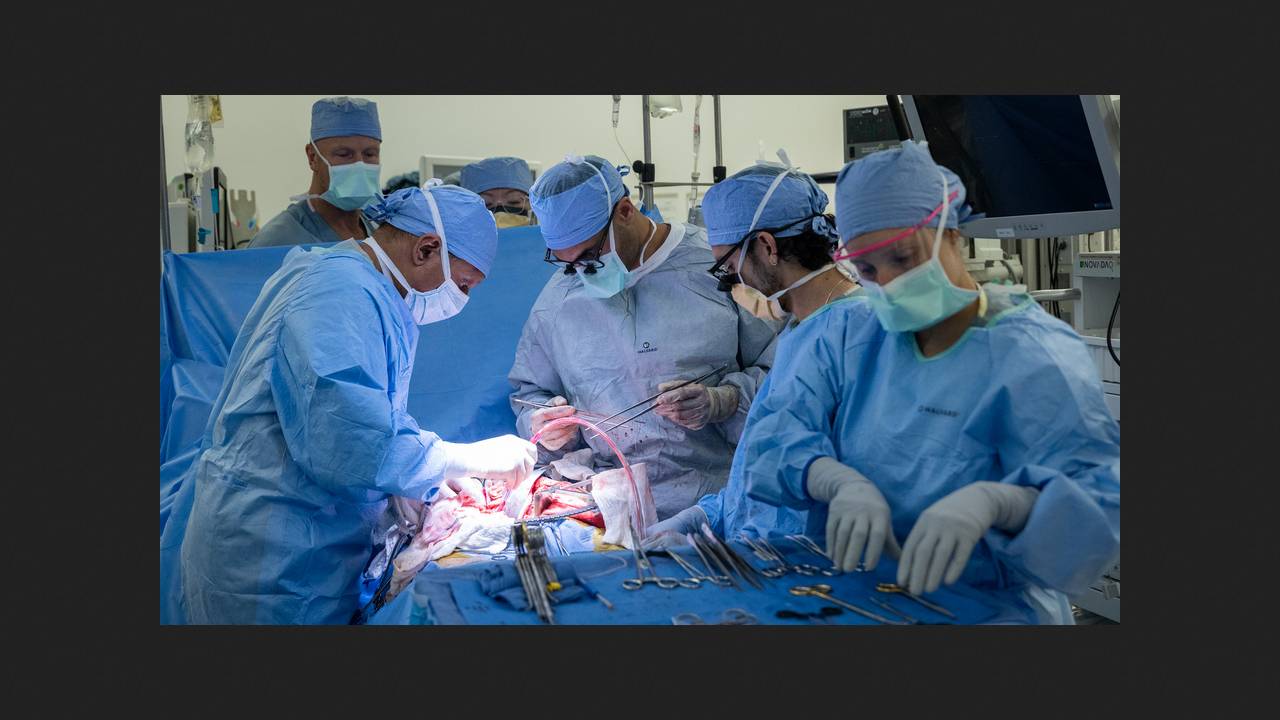
When a suitable donor was found on May 4, Gill and Nassiri participated in the removal of a kidney and bladder for transplant. They were transplanted into Larrainzar that same day using an experimental technology developed. The surgery lasted approximately eight hours. The kidney immediately began producing a large volume of urine, which flowed freely into the bladder, and the patient's condition began to improve. After the surgery, he no longer required dialysis, and his creatinine levels began to decline rapidly. During postoperative rehabilitation, his weight decreased by nine kilograms due to the elimination of excess fluid. Nine days after the surgery, he was discharged home.
Because the transplanted bladder lacked innervation, doctors didn't expect the patient to be able to sense its fullness, and considered using catheters, abdominal manipulation, and electrical stimulation to promote urine flow. However, when Nassiri removed the catheter and offered Larrainzar a drink of water at a follow-up appointment two days after discharge, he reported that he wanted to urinate and felt able to. To the urologists' surprise, he began urinating on his own. However, it remains unclear what the long-term outcome will be with his urination, and how much immunosuppression the patient will require.
The experimental procedure was conducted as part of a pilot clinical trial initiated by Gill and Nassiri, which is planned to involve five participants. Since it is difficult to weigh the potential benefits of a donor bladder against the risks associated with immunosuppressive therapy, the intervention is currently being considered primarily as a means of helping patients who already require immunosuppression due to a transplant.
Urinary tract stents and catheters, essential for many urology patients, require frequent replacement due to the buildup of salt deposits and bacterial biofilms on their walls. Swiss and American researchers have developed a self-cleaning technology for these devices using ultrasound-activated biomimetic cilia resembling ciliated epithelium.
