
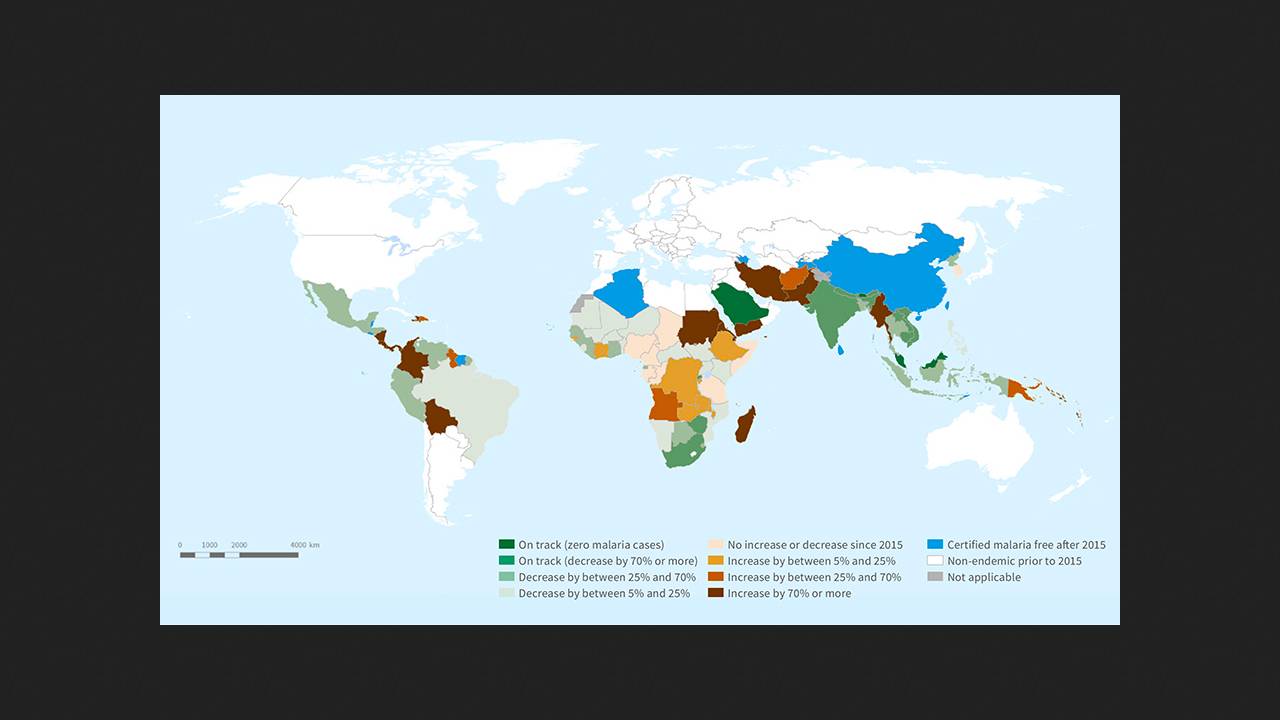
The World Health Organization published its Global Malaria Report and outlined its key findings in a press release. According to the document, there will be an estimated 282 million cases of malaria worldwide in 2024, approximately nine million more than the previous year, with 610,000 deaths. Approximately 94 percent of cases and 95 percent of deaths occurred in the WHO African Region, with approximately three-quarters of the victims being children under five.
This situation persists despite the progress made in the fight against malaria: by 2025, vaccination against the infection has been introduced in 24 countries, and chemoprophylaxis in 20. Forty-seven countries and one territory have been recognized by the WHO as having eradicated malaria, with Egypt and Cabo Verde the most recent to achieve this status in 2024 and Timor-Leste, Georgia, and Suriname in 2025. The organization estimates that since 2000, new prevention methods such as vaccination, chemoprophylaxis, and insecticide-treated mosquito nets have prevented approximately 170 million cases of the disease and one million deaths. The main challenges in the fight against malaria include the spread of resistance of the plasmodia pathogen to antimalarial drugs and of mosquitoes that carry it to insecticides, as well as a lack of funding—only $3.9 billion has been allocated in 2024, compared to a planned budget of $9.3 billion.
